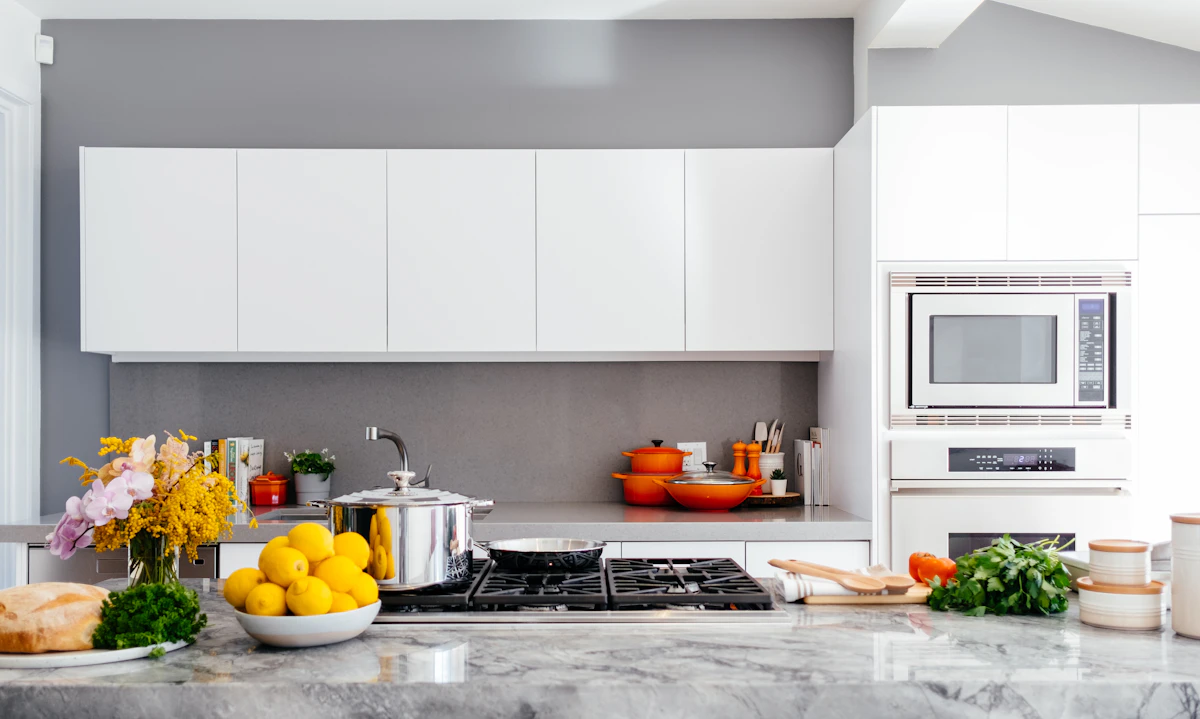
Built-in ovens and microwaves are appliances that mount flush inside your cabinetry rather than sitting loose on a counter, and for most people the payoff is a kitchen that looks custom-built—plus the comfort of controls and cooking surfaces sitting at eye level. They also tend to out-cook their freestanding cousins, with convection fans, steam injection, and self-cleaning cycles a plug-in unit simply can't fit. This guide walks through the types, the features worth paying for, and what installation really demands.
The Main Types of Built-In Ovens
Built-in ovens split into a handful of categories, each aimed at a different cooking style and kitchen layout. Sorting those out matters before you sink money into something meant to serve your household for a decade or more.
Conventional Built-In Ovens
The oldest and most straightforward option, a conventional built-in oven heats with elements at the top and bottom of the cavity. Heat radiates inward from the walls, cooking food through direct thermal radiation. It's dependable, but hot spots are a real issue—whatever sits nearer the element cooks faster than the food beyond it. Bakers who like gentle, even browning and don't need convection speed still find plenty to like here.
Convection Built-In Ovens
Convection models add a rear-mounted fan that keeps hot air moving through the whole cavity, killing the hot spots conventional ovens suffer from. Because circulating air transfers heat to food more efficiently, cooking times drop by roughly 25% and you can dial the temperature down about 25 degrees Fahrenheit without changing results. That fan is what lets you bake two trays of cookies at once, produce even batches of muffins, and hit uniformly golden roasts and pastries.
Steam-Assist Built-In Ovens
Steam-assist models are the frontier of home cooking right now. They inject controlled amounts of moisture into the cavity during baking or roasting, and that humidity does a lot: it stops bread dough from forming a dry crust during the initial rise, keeps meat from drying out on long roasts, and preserves the color and nutrients of vegetables. High-end machines from Miele and Gaggenau even run automatic steam programs that read the food and adjust moisture on their own.
Combination Ovens
Combination units bundle convection and steam into one cavity, opening up the widest range of cooking modes you can buy. Flick between a standard convection oven, a dedicated steamer, or a hybrid that runs both at once. In a small kitchen where one appliance has to handle baking, roasting, steaming, and reheating, these earn their keep.
Built-In Microwave Options
Built-in microwaves tuck into a cabinet or wall unit, usually at eye level for easy reach. They clear off the counter and give the whole room a more organized, deliberate feel.
Standard Built-In Microwaves
Standard built-in microwaves concentrate on reheating, defrosting, and quick cooking, with power levels between 800 and 1,200 watts and presets for popcorn, beverages, and everyday foods. A trim kit frames the opening and manages ventilation. Most still use a turntable, though some premium models switch to flatbed tech that drops the turntable altogether and frees up usable interior space.
Combination Microwave-Convection Units
A microwave-convection combo might be the single most flexible appliance you can install. It pairs microwave speed with convection browning and crisping, so you can roast a chicken skin-side crisp using convection and then finish the center with microwave energy—total time dropping from over an hour to under 30 minutes. One compact package pulls triple duty as a second oven, a fast cooker, and a standard microwave.
Features Worth Paying For
Several features decide how pleasant these appliances are to live with day to day—and how satisfied you stay years down the road:
- Cooking capacity: Built-in ovens span roughly 24 to 30 inches wide. Most families do fine with a 27-inch unit, while 30-inch models shine for anyone who roasts big cuts or entertains often.
- Self-cleaning technology: Pyrolytic models burn residue to ash at extreme heat; catalytic liners absorb grease as you cook and release it during a high-temperature cycle.
- Soft-close doors: Hydraulic dampers let the door settle gently instead of slamming, which spares the hinges years of wear.
- Interior lighting: Several halogen or LED lights across the cavity mean you can check on food without opening the door and losing heat.
- Smart connectivity: Wi-Fi models let you check temperature from another room, download recipes, and even talk to your oven through a smart assistant.
- Telescopic racks: Full-extension runners pull heavy dishes all the way out without tipping, a real safety win with hot loads.
How the Big Brands Stack Up
| Brand | Specialty | Price Range | Key Advantage |
|---|---|---|---|
| Bosch | Built-in appliances | $1,200 – $3,500 | Refined European build; strong steam-assist lineup |
| Miele | Premium appliances | $2,500 – $7,000 | Outstanding build quality; automatic cooking programs |
| Samsung | Smart appliances | $1,000 – $2,800 | Solid Wi-Fi and flexible SmartThings integration |
| KitchenAid | Professional home | $1,800 – $4,200 | Even-Heat convection and a sturdy frame |
| Gaggenau | Luxury appliances | $4,000 – $12,000 | Handcrafted German build; pro-level performance |
What Installation Really Involves
Mounting a built-in oven or microwave is a far bigger project than dropping a freestanding unit in place. Electrical planning comes first: most built-in ovens need a dedicated 240-volt circuit with a 30- to 50-amp breaker depending on wattage, while microwaves typically want a dedicated 120-volt, 20-amp circuit—larger combos may call for 240-volt service.
Cabinet dimensions have to fit not just the appliance but its ventilation. Manufacturers usually specify at least 15 to 30 millimeters of clearance above, below, and behind the unit so it can breathe, and the cavity needs heat shielding to protect nearby cabinetry and counters from heat damage.
For microwaves, the trim kit is what makes the install look finished and keeps airflow right. It hides the gap around the appliance and channels hot air away. Always order the manufacturer-specific kit for your exact model—off-brand trims compromise both looks and performance.
Keeping Your Oven Going for Years
A built-in oven is a long-haul purchase, and a little routine care protects that investment:
- Clean spills promptly: Wipe spills while the oven is warm but not hot. Baked-on grease only gets harder to shift, and it smokes on the next cook.
- Use the self-cleaning cycle wisely: Pyrolytic cleaning runs at roughly 900°F, and that heat stresses seals and electronics. Save the cycle for every few months rather than weekly.
- Inspect door seals regularly: A cracked or warped seal leaks heat, dropping efficiency and driving up energy bills. Swap it at the first sign of damage.
- Check ventilation filters: Built-ins rely on airflow. Clean or replace ventilation filters on the manufacturer's schedule to stop overheating.
- Avoid abrasive cleaners: Stick to manufacturer-approved products and non-abrasive sponges, especially on catalytic or pyrolytic linings.
Related Guides
Building out the rest of the kitchen? The Kochfelder Cookware Guide sorts premium pots and pans, the Nescafe Coffee Machine Guide handles your morning brew, and our High-Pressure Cleaner Guide tackles the heavy cleaning.
Frequently Asked Questions
How is a convection oven different from a conventional one?
A convection oven runs a fan that keeps hot air circulating, so food cooks faster and more evenly. A conventional oven relies on radiant heat from top and bottom elements, which leaves hot spots and stretches out cooking times.
Can a built-in microwave stand in for a full-size oven?
Not fully. Roasting a large joint or baking cookies on multiple racks still calls for a real oven. Combination microwaves with convection, though, can handle plenty of baking and roasting chores while keeping the speed advantage of microwave cooking.
How much room does a built-in oven installation need?
Plan on a cabinet cutout of roughly 60 cm wide by 60 cm high for European models, or 24 inches wide by 30 inches high for US units. Always confirm exact dimensions, plus ventilation clearances on every side, against the manufacturer's spec sheet.
What matters most when buying a built-in microwave?
Watch the wattage (900-1200W for fast cooking), turntable size, presets, sensor cooking, and how easy the interior is to clean. For built-ins, check that the trim kit matches your cabinetry and leave proper ventilation clearance.